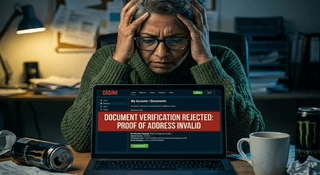
Proof of Address Rejected by an Online Casino?
Last updated: 15 October 2026
Having your proof of address rejected by an online casino can be frustrating, particularly when you're waiting for a withdrawal. The problem is often straightforward: an outdated statement, an unreadable image, missing information or an address that doesn't match your account details.
This guide explains why casinos reject proof of address documents, which alternatives they may accept and how to prepare a successful resubmission. We'll also cover what to do when repeated rejections seem unreasonable and when it may be time to make a formal complaint.
Casino Beacon Opinion
Rejecting a proof of address document is perfectly reasonable when it fails to meet clearly stated verification requirements. What isn't reasonable is expecting players to guess which documents will be accepted or repeatedly submit alternatives without knowing why earlier attempts failed.
Casinos should publish clear document requirements and provide specific explanations when submissions are rejected. If a document is too old, unreadable or missing essential information, say so. Players should be able to correct genuine problems without getting trapped in an endless cycle of uploads and contradictory instructions.
Why Proof of Address Gets Rejected
Casinos need to confirm that the address registered on your account matches reliable supporting evidence. Even a genuine document can be rejected if it doesn't meet the casino's verification requirements. These are the most common reasons:
- Outdated documents: Many casinos require proof dated within the last three months.
- Unreadable images: Blurry photographs, poor lighting or low-resolution scans can make important details difficult to verify.
- Missing information: Your full name, residential address, document date or issuing organisation may not be visible.
- Unaccepted document types: Some casinos reject mobile phone bills, handwritten letters or documents that aren't on their approved list.
- Address mismatches: The document may show an old address, a different flat number or details that don't match your casino account.
- Altered or incomplete files: Cropped pages, edited images or screenshots may be rejected even when the information itself is accurate.
A rejection doesn't necessarily mean the casino suspects wrongdoing. It may simply be unable to confirm your residential address from the evidence provided. Proof of address checks can also form part of a wider review involving your identity or payment details.
If the rejection message is vague, ask support to identify the specific problem before submitting anything else. Knowing whether the issue concerns the document type, its age or the information displayed will help you choose a suitable replacement.
What Documents Usually Work as Proof of Address
Most casinos accept documents issued by banks, utility providers or government bodies, provided they clearly identify you and your residential address. However, accepted document types vary, so check the casino's requirements before submitting anything.
- Utility bills: Electricity, gas and water bills are commonly accepted. Mobile phone bills may not qualify.
- Bank statements: A recent statement showing your name and residential address is often suitable, including an original PDF downloaded from online banking.
- Government correspondence: Official letters from tax authorities or other government departments may be accepted if they show the required details.
- Local authority documents: Council tax bills or equivalent municipal correspondence can sometimes provide acceptable evidence.
Whichever document you choose, it will usually need to display your full legal name, current residential address, issue date and the identity of the organisation that issued it. Many casinos require documents dated within the last three months, although some document types may have different validity periods.
If you receive paperless bills, an original PDF statement may be a better choice than a screenshot. Avoid cropping, editing or obscuring information unless the casino specifically permits it. Some casinos also require every page of a statement, even when your address appears on the first page.
How to Resubmit Successfully
Once you understand why your original document was rejected, the next step is to prepare a replacement that meets the casino's requirements. Work through these checks before uploading anything else:
- Confirm the requirements. Ask support which document types, formats and issue dates are accepted.
- Select a suitable document. Choose a recent statement, bill or official letter that meets those requirements.
- Check every detail. Make sure your name, residential address, issue date and issuing organisation are clearly visible.
- Compare your account information. Check that the address on the document matches your registered details, including any flat or apartment number.
- Use the original file. Submit a clear photograph, scan or PDF in the format requested. Avoid unnecessary editing or compression.
- Keep a record. Save the document, submission date and any confirmation or response from the casino.
Submit the document through the casino's official verification area or another secure method it specifically provides. Avoid sending sensitive documents through social media messages or unofficial support contacts.
If the replacement is rejected, ask for a specific explanation and compare it with the original rejection. Keep both responses. Repeatedly changing requirements or contradictory instructions may justify escalating the matter through the casino's complaints procedure.
When Rejection Becomes a Red Flag
A rejected document is not automatically a warning sign. What matters more is how the casino explains the rejection and what happens when you follow its instructions. The situation becomes more concerning when:
- The casino will not explain why the document was rejected
- Different support agents give contradictory instructions
- You provide what was requested but the requirements keep changing
- The casino asks for unusual alternatives without explaining why
- New document requests keep appearing without a clear reason
- Your withdrawal remains blocked and nobody can give you a meaningful update
These problems don't automatically mean the casino is deliberately avoiding payment. Poor communication, internal confusion or additional security checks can all cause unnecessary delays. However, a legitimate verification process should still provide a reasonable explanation of what's required.
If you've supplied the requested documents but the casino continues to reject them without a clear explanation, ask for the matter to be reviewed by its verification or complaints team. Keep copies of your submissions, rejection messages and correspondence, along with the dates of each exchange.
If the issue remains unresolved, follow the casino's formal complaints procedure and check whether an independent dispute resolution service or gambling regulator can consider your case. Our guide to complaining about an online casino explains how to prepare your evidence and escalate a dispute.
Proof of Address Rejected FAQ
Why did my proof of address get rejected by an online casino?
Common reasons include an outdated document, an unreadable image, missing information or an address that doesn't match your casino account. The casino may also reject documents that aren't on its approved list.
What documents do casinos usually accept as proof of address?
Utility bills, bank statements and official government correspondence are commonly accepted. Documents generally need to show your full name, residential address and issue date. Check the casino's requirements before uploading anything.
How recent should proof of address be?
Many casinos require documents dated within the last three months, although the rules vary. Some document types may have different validity periods, so check the casino's specific requirements.
Can an online casino reject a digital statement or screenshot?
Yes. Some casinos accept original PDF statements downloaded from online banking but reject screenshots, cropped images or edited files. Use the document format specified by the casino.
What should I do if my proof of address keeps being rejected?
Ask for a specific explanation of each rejection and confirm which alternatives are acceptable. Keep records of your submissions and the casino's responses. If the requirements keep changing without explanation, consider making a formal complaint.
Does proof of address rejection mean the casino is a scam?
No, not necessarily. Proof of address checks are a normal part of casino verification. Repeated unexplained rejections, contradictory instructions or unreasonable withdrawal delays are more concerning than a single rejected document.