Why Online Casinos Ask for ID, Selfies, and Documents (2026)
Last updated: 06 October 2026
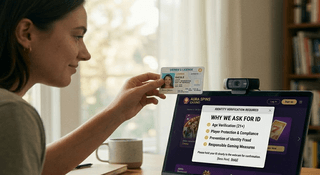
If an online casino has asked you for photo ID, a selfie, proof of address or payment documents, don't panic - this is usually a normal part of the verification process at legitimate gambling sites. These checks exist to protect your money, stop fraud and ensure that withdrawals are only paid to the real account holder.
In this guide, Casino Beacon explains why casinos ask for these documents, what each one is used for, when extra checks are triggered, how to tell a genuine request from a suspicious one and which casinos make the process smooth and painless.
- Casinos with Smooth Verification
- Why Casinos Ask for Documents
- Why Casinos Ask for Photo ID
- Why Casinos Ask for a Selfie
- Why Casinos Ask for Proof of Address
- Why Casinos Ask for Payment Method Proof
- What Each Document Is Used For
- Why Checks Often Happen After Winning
- Is It Safe to Send Casino Documents?
- Document Request Red Flags
- How to Pass Verification Faster
- ID, Selfies & Documents FAQ
Casino Beacon Opinion
A document request should not put you off a casino by itself. What matters more is how the verification is handled. Clear instructions, a secure upload system and specific explanations for any additional requests are good signs. Repeated requests for documents without a clear reason are much more concerning.
Trusted Casinos with Smooth ID & Selfie Verification
All properly licensed casinos require some form of KYC verification, but the best sites make the process clear, secure and fast. These recommended casinos are known for simple upload systems, sensible document checks and reliable payouts once your account is approved.
 Decode
Straightforward KYC checklist, instant uploads and friendly support if you need help with selfie or ID checks. Casino Beacon visitors get 10 free spins on Fat Ca$h slot, no deposit required.
Play Now - See Review
 Winz
Winz
Automated checks for many players, very clear instructions, and instant cashouts once verified. Up to $/€20,000 or 800 free spins prize on qualifying deposits, three times every week - no wagering required.
Play Now - See Review
 Sloto'Cash
Trusted casino, online since 2007. Dedicated verification support, accepts common proof-of-address documents and usually approves clear submissions within 24 hours. 20 free spins on T-Rex II with no deposit required.
Play Now - See Review
 LevelUp
Exclusive casino for players in Australia, Austria, Canada, Denmark, Finland, Germany, Ireland, New Zealand, Norway and Switzerland, with fast KYC checks and 15-minute cashouts. Welcome bonuses up to $/€20,000 + 500 free spins.
Play Now - See Review
Why Casinos Ask for Documents: The Short Version
Casinos may ask for different documents depending on the checks required for your account. These can confirm your identity, age, location and ownership of the payment methods you use.
- To confirm your identity - so winnings are paid to the right person.
- To verify your age - and prevent underage gambling.
- To stop fraud - including stolen cards, fake accounts and impersonation.
- To confirm your location - especially where licensing rules vary by country or state.
- To verify payment ownership - so nobody is gambling with someone else's card or wallet.
- To meet regulatory requirements - including identity and anti-money laundering checks where applicable.
While document requests can feel intrusive, they are a normal part of account verification at many licensed online casinos. The exact checks and documents required can vary between casinos, jurisdictions and individual accounts.
Why Do Online Casinos Ask for Photo ID?
Photo ID is the most basic and important part of casino verification. It tells the casino that you are a real person, that your name matches the account and that you are legally old enough to gamble.
- Identity confirmation: The casino needs to know you are the genuine owner of the account.
- Age check: Licensed casinos must prevent underage gambling.
- Payout protection: The casino must make sure withdrawals are sent to the correct person.
- Fraud prevention: Fake names and stolen identities are a major compliance risk for gambling sites.
Common accepted documents include a passport, driving licence or national identity card. Your ID normally needs to be valid, readable and match the details you used when signing up.
Why Do Casinos Ask for a Selfie?
A selfie request often surprises players the first time it happens but it is now very common - especially at larger casinos and on accounts that trigger extra security checks.
The purpose is simple: the casino wants to match your face to your ID and prove that the person submitting the documents is the real account holder.
- Face match: Helps confirm your ID belongs to you.
- Anti-impersonation: Stops criminals using stolen or bought documents.
- Extra protection for withdrawals: Particularly common before first cashout or after a big win.
- Reduced support disputes: It creates a clearer audit trail if someone later claims the account was hijacked.
Why Do Casinos Ask for Proof of Address?
Proof of address helps the casino confirm that your residential details are genuine and that you are allowed to play from your location. This matters because casino rules, taxes and licensing restrictions vary between countries and regions.
- Jurisdiction checks: Some casinos cannot legally accept players from certain countries, states or provinces.
- AML compliance: Address verification forms part of wider anti-money laundering rules.
- Consistency check: The casino compares your address document against the details on your account.
- Risk control: False or inconsistent addresses can trigger further account review or withdrawal delays.
Acceptable documents often include utility bills, bank statements, tax letters or government correspondence dated within the last 3 months.
Why Do Casinos Ask for Payment Method Proof?
If you deposit by debit card, bank transfer, e-wallet or sometimes crypto, the casino may ask for proof that the payment method belongs to you. This is an anti-fraud measure and an important part of safe withdrawals.
- Card ownership check: Helps stop stolen or third-party card use.
- E-wallet confirmation: Shows that your Skrill, Neteller or other wallet is in your name.
- Banking match: Prevents payouts going to unrelated accounts.
- Chargeback protection: Reduces fraud involving disputed deposits.
This is one reason casinos often recommend using payment methods registered in your exact legal name. If names do not match, you may run into delays or even rejected withdrawals.
What Each Document Is Used For
Different documents answer different verification questions. Some confirm who you are, while others establish where you live, how you paid or where deposited funds came from.
← Swipe to view full table →
| Document Type | What It Proves | Why the Casino Wants It |
|---|---|---|
| Photo ID | Your name, age and identity | To confirm you are the real account holder and legally old enough to play |
| Selfie / selfie with ID | That you physically match the ID | To stop impersonation and stolen-document fraud |
| Proof of address | Your current residential address | To confirm your location and comply with regional licensing rules |
| Payment method proof | That the card or wallet belongs to you | To prevent third-party payment abuse and protect withdrawals |
| Bank statement / source of funds | Where your gambling funds came from | To satisfy extra AML checks on larger or unusual transactions |
Why Are You Sometimes Asked for Documents Only After Winning?
Being asked for documents when you first withdraw can feel suspicious, particularly if you were allowed to deposit and play without completing the same checks. However, verification does not always happen at the same stage of an account's life.
Some casinos carry out identity checks during registration, while others request additional documents when a withdrawal or other account activity triggers further verification. The timing can depend on the casino, its licensing requirements and the circumstances of the individual account.
- First withdrawal requests often trigger KYC automatically.
- Larger-than-normal wins may lead to extra review.
- Cumulative withdrawals can trigger AML thresholds.
- Mismatch issues - such as different names or addresses - can trigger manual checks.
- Bonus use, multiple accounts or unusual deposits can lead to deeper review.
Why Large Withdrawals Can Trigger Extra Checks
A large withdrawal may receive more scrutiny than a routine cashout, but the amount alone is not always the reason. Casinos can carry out additional checks based on transaction size, account history, payment activity and the regulatory rules that apply to them.
- Additional due diligence: Some transactions may require a closer compliance review.
- Source of funds: A casino may ask for evidence showing where deposited money came from.
- Manual review: Larger or unusual withdrawals may be checked by staff rather than processed automatically.
- Licence requirements: The checks required can vary by jurisdiction and individual circumstances.
If you receive an extra request, check what the casino is asking for and why. A legitimate request should be specific, relevant and submitted through a secure method.
Is It Safe to Send Documents to an Online Casino?
Sending identity documents always involves some risk, so check the casino and the submission method before uploading anything. A licence, established reputation and secure document portal are useful signs, but none should be treated as a guarantee on its own.
- Check that the site is properly licensed.
- Make sure the upload page is secure and uses HTTPS.
- Read the privacy policy before sending sensitive documents.
- Use the casino's secure upload area where possible, not random email addresses.
- Only provide the exact documents requested.
If a site looks unlicensed, unprofessional or evasive, be much more cautious. A legitimate document request is one thing - a shady casino collecting personal files is another.
Red Flags: When a Document Request Might Be a Warning Sign
A request for ID or other documents is not automatically suspicious, but the way a casino handles verification can reveal problems. Be more cautious when requests are unclear, repeatedly change or cannot be properly explained.
- The casino has no clear licence details or reputation.
- Support keeps asking for different documents without explaining why.
- The same documents are rejected repeatedly with vague reasons.
- There is no secure upload page and they insist on unsafe methods.
- New requirements appear after you request a withdrawal without a clear explanation.
- Support becomes evasive or refuses to explain the process.
Not every delay means a scam - some casinos are simply slow or badly organised. However, repeated unclear requests and poor communication are warning signs. If in doubt, check independent reviews and licensing details before sending anything else.
How to Pass Casino ID & Document Checks Faster
Most verification delays come from missing details, unclear images or information that does not match the casino account. A few simple checks before submitting your documents can reduce the chance of having to send them again.
- Use your real name, real address and correct date of birth when signing up.
- Make sure your documents are current and not expired.
- Upload clear, uncropped images with all corners visible.
- Follow selfie instructions exactly if asked for a pose, note or ID hold.
- Use payment methods that match your legal name.
- If the casino offers verification before withdrawal, consider completing it early.
- Reply quickly if the casino asks for replacement images or additional proof.
ID, Selfies & Casino Documents FAQ
Why does an online casino need my ID?
Licensed casinos use photo ID to confirm your identity and age, prevent fraud and make sure withdrawals go to the correct person.
Why did the casino ask for a selfie holding my ID?
A selfie helps the casino confirm that the person opening the account is the same person shown on the ID, reducing fraud and stolen-document abuse.
Why do casinos ask for proof of address?
Proof of address helps casinos confirm where you live, comply with licensing rules and check that your account details are genuine and consistent.
Why do casinos ask for payment method proof?
Casinos ask for payment proof to confirm that the card, e-wallet, bank account or crypto wallet used on the account belongs to you and is not linked to fraud.
Why was I only asked for documents after winning?
Verification timing varies. Some casinos check your identity during registration, while others may request additional documents when you withdraw, change payment details or trigger a further account review.
Is it safe to send documents to an online casino?
Sending documents always involves some risk. Check the casino's licence and reputation, use its secure upload system and only provide documents relevant to the stated verification request.
Can a casino legally refuse to pay me until I verify?
A casino may hold a withdrawal while required identity or compliance checks are completed, depending on its licence, local rules and terms. That is different from permanently refusing to pay. If verification is complete and a withdrawal remains blocked, ask for the reason and use the casino's complaints process if necessary.
What if I do not have a utility bill in my name?
Many casinos also accept bank statements, tax letters or government correspondence as proof of address. If needed, ask support which alternatives are allowed.
Why would a casino ask for bank statements or source of funds?
For larger deposits, withdrawals or unusual account activity, some casinos must carry out extra anti-money laundering checks and may ask where your gambling funds came from.
How can I tell if a casino document request is legitimate?
A legitimate request should come from a licensed casino, explain exactly what is needed and use a secure upload method. Repeated vague requests or missing licensing details can be red flags.