How Online Gambling Has Changed
Last updated: 18 September 2026
Online gambling does not stand still for long. Over the past decade especially, the industry has changed in ways that would have seemed dramatic to players used to older casino websites, slower payments, downloadable desktop software, and a much narrower range of games.
Today's online casino experience is faster, more mobile, more visual, and more varied than it used to be. Payment options have evolved. Live dealer play has become a major category. Crypto has moved from curiosity to established niche. Game design has become more theatrical, more social, and in some cases more influenced by streaming culture and video games.
In this article, we look at how online gambling has changed, what those changes mean for players, and why the modern casino experience now feels very different from the one many people first encountered years ago.
Quick Picks: Casinos Reflecting the Modern Online Gambling Era
Casino Beacon Opinion
Online gambling hasn't changed through technology alone. Faster withdrawals, clearer bonus terms, better mobile sites and stronger customer service have increasingly become things players expect rather than optional extras. Modern casinos are competing as much on convenience and transparency as they are on games and bonuses.
Casinos That Reflect Today's Online Gambling

Decode
Best for: wide game variety across multiple providers.
Decode shows how modern casinos increasingly bring together games from multiple software providers instead of relying on a single platform. Players benefit from greater choice, more varied experiences, and regular new game additions. New members are welcomed with 10 free spins on Fat Ca$h, no deposit required.
Play Now - See Review
Lucky Elf
Best for: huge game selection and fast withdrawals.
Lucky Elf represents the newer generation of online casinos built around speed, scale, and player convenience. 15-minute withdrawals, one of the industry's largest game libraries, and broad software support make it a strong example of how expectations have changed over the past decade. Lucky Elf is available to players in Australia, Austria, Canada, Denmark, Finland, Germany, Ireland, New Zealand, Norway and Switzerland.
Play Now - See Review
Roaring 21
Best for: familiar casino structure with faster modern expectations.
Roaring 21 is a good example of how established online casinos have evolved. Targeted at players in the USA and Canada, it offers classic SpinLogic/RTG slots alongside ViG live dealers, reliable payouts, crypto support and a modern experience whilst providing a familiar feel that long-time players appreciate.
Play Now - See Review
Winz
Best for: the modern mega-library casino model.
Winz reflects the modern trend towards huge game libraries, instant withdrawals, and simpler bonus structures. It's a good example of how today's casinos compete on convenience and overall player experience rather than simply offering more games. Unlike most online casinos, bonuses at Winz have no wagering requirements.
Play Now - See ReviewThen vs Now: The Big Shift
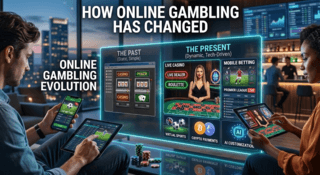
Older online casino experiences were often more static, more desktop-focused, and less flexible. Many players downloaded software to their computer, or installed via CD! Game libraries were much smaller and were exclusive to one particular provider. To access new games, an additional download was required.
Banking options were much narrower. Withdrawals could feel slower and less predictable, often taking several weeks to arrive. Mobile play, where available, was often a stripped-down afterthought rather than the main event, with early mobile casino sites offering a far clumsier experience than today's versions.
Today, the online casino model is much more fluid. Browsers and apps have largely replaced the idea that you need a dedicated software download. Game ranges are considerably larger. Interfaces are more polished. Navigation is better. Players now expect near-instant access, smoother deposits, faster or instant withdrawals, and a casino experience that works just as naturally on a phone as on a laptop.
In short, online gambling has moved from a more limited desktop product into a broader, more responsive, always-available entertainment ecosystem.
The Rise of Mobile-First Play
One of the biggest changes has been the shift from desktop-first to mobile-first design. Online casinos once treated phone compatibility as a bonus feature, and not always done particularly well. Now, for many players, the phone is the main device.
This shift has affected everything:
- shorter sessions and quicker browsing habits
- interfaces designed for taps rather than mouse clicks
- game menus built for scrolling and filtering
- faster sign-up and payment flows
- greater emphasis on convenience over ritual
The result is that online gambling now fits more easily into everyday digital life. That convenience has been one of the defining changes of the modern era.
Payments, Payouts, and Crypto
Another major change is how money moves. Older online casinos often relied on a narrower set of payment methods and could feel clunky when it came to deposits or cashing out. Processing times were often part of the accepted compromise.
Modern players are less willing to tolerate friction. Faster withdrawals, clearer cashier sections, wider payment support, and more transparent processing expectations are now a much bigger part of what defines a good casino.
Crypto has also become an important part of the picture. While still a niche compared with mainstream payment behaviour overall, crypto gambling has grown from something specialist into a well-established segment of the online casino world. It appeals to players looking for speed, flexibility, and a more digital-native way to move funds.
For more on that side of the market, see our crypto casinos explained guide.
Live Dealer and the Influence of Streaming Culture
In many ways, live dealer games are the closest online gambling has come to recreating the physical casino atmosphere without requiring travel.
Live dealer gaming has changed online gambling by making it feel more immediate, social, and visually engaging. Instead of a purely digital interface, players can now join professionally streamed blackjack, roulette, baccarat, and game-show sessions hosted by real dealers in studio environments.
This helped solve one of the older limits of online casino play: it could sometimes feel detached or mechanical. Live dealer games introduced presence, atmosphere, pacing, and a more recognisable human element.
Streaming culture has pushed this further. The wider digital entertainment world has trained players to expect spectacle, personality, live presentation, and visual momentum. Casino game shows, chat-based features, and presenter-led formats reflect that change clearly.
If that side of the market interests you, our live dealer casinos guide is the natural next read. If you are new to shared tables and chat-based play, our Beginner's Guide to Casino Etiquette explains the basics of live dealer manners too.
How the Games Themselves Have Changed
The games have evolved too. Older online casinos often felt centred around a more limited set of classic slots, table games, and video poker variants. Those categories still matter, but modern casinos offer far more variety in pacing, style, volatility, and presentation.
Changes include:
- more cinematic slot design and stronger themes
- wider volatility ranges and more feature-heavy slots
- growth in crash games and other simple but intense formats
- more game-show-style hybrids
- greater provider competition and differentiation
- larger libraries of niche variants and experimental titles
The result is that online gambling now feels less standardised than it once did. There are more ways to play, more moods to choose from, and more formats designed to appeal to different player personalities.
You can see some of that variety in our guides to comparing online slot games and the world's strangest casino games.
How the Player Experience Has Changed
The player experience is no longer just about logging in and picking a game. Modern online casinos compete on overall usability, speed, presentation, loyalty design, and how frictionless the whole journey feels.
Players now notice:
- how easy it is to find games
- how quickly they can deposit and withdraw
- whether the site feels trustworthy and transparent
- whether bonuses are simple or overcomplicated
- how well the experience works across devices
In other words, expectations have risen. What once counted as acceptable is no longer enough for many players. Speed, clarity, and convenience have become core parts of the product.
Another change is that players now pay closer attention to bonus terms, wagering requirements, maximum cashout limits, and withdrawal conditions. In earlier years, many players simply signed up and claimed whatever was offered. Today, comparison culture is stronger, and players are generally more alert to how much the small print matters.
What Might Come Next?
If the last decade has shown anything, it is that online gambling keeps absorbing trends from the wider digital world. Faster payments, smoother interfaces, stronger live presentation, and more experimental game mechanics are unlikely to disappear. In some regulated markets such as the UK, features including autoplay and Bonus Buys have been restricted or removed.
Future changes may include even more personalisation, better real-time features, more hybrid formats, and continued pressure on casinos to reduce friction in everything from sign-up to payout speed.
At the same time, some of the basics still matter just as much as ever: trustworthiness, fair terms, understandable game information, and a product that fits the player's own style.
Technology changes quickly, but the core question remains familiar: does this casino experience feel reliable, enjoyable, and worth coming back to?
FAQ
How has online gambling changed the most?
The biggest changes have been mobile-first design, faster payments, growth in live dealer gaming, wider game variety, and the rise of crypto-friendly casino models.
Did online casinos used to require downloads?
Yes, many older online casinos relied much more heavily on downloadable desktop software than most modern sites do today.
Why are live dealer games more important now?
They make online gambling feel more social, immediate, and immersive, and they reflect the wider influence of live streaming and visual entertainment culture.
Has crypto changed online gambling?
Yes. While crypto remains a niche segment compared with all online gambling activity, it has become an established and influential part of the modern casino ecosystem.
Are modern online casinos better than older ones?
Modern online casinos generally offer greater convenience, wider game libraries and faster payments, although individual casinos still vary considerably in trust, terms and overall quality.
What has not changed?
The fundamentals still matter: fairness, trust, sensible bankroll management, and understanding what kind of games and casino experience actually suit you.